Common vs. Proper Nouns: Understanding Key Distinctions
Nouns are the backbone of language, the fundamental building blocks that allow us to name and categorize everything in our world. From the tangible items we can touch to the abstract concepts we ponder, nouns give shape and meaning to our communication. Without them, our sentences would lack subjects, objects, and the very essence of what we wish to discuss. While all nouns serve to identify people, places, things, or ideas, a crucial distinction lies in whether they are common or proper. Understanding this difference is not just a grammatical exercise; it's essential for clarity, precision, and effective writing.
Before diving into the specifics of common and proper nouns, it's worth a quick refresher on the broader category. As we explore in more detail in Nouns Explained: Definition, Types, and Usage in English, a noun is simply a word that functions as the name of a specific object or set of objects, such as living creatures, places, actions, qualities, states of existence, or ideas. They are omnipresent in our daily discourse, helping us navigate the complexities of our shared reality.
The Foundation: What Are Common Nouns?
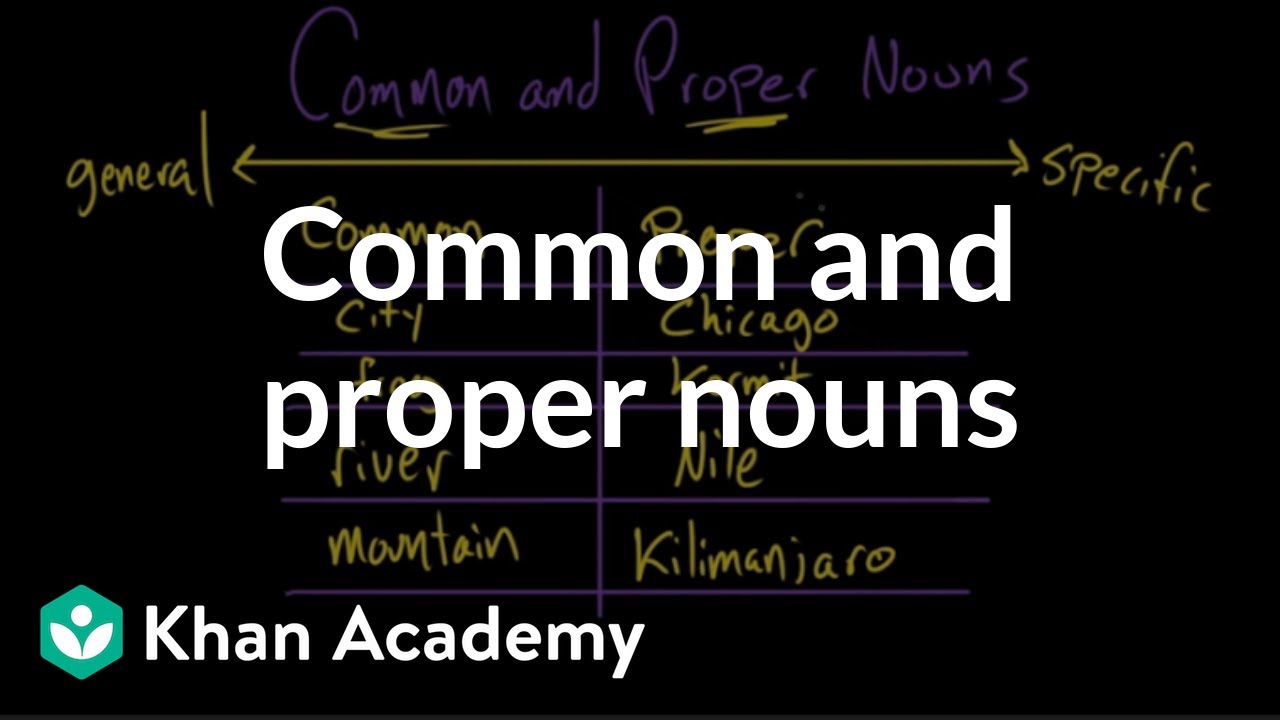
Imagine a bustling city street. You see a car, a building, a person, and a dog. Each of these italicized words is a common noun. A common noun, sometimes referred to as a generic noun, is the general, non-specific name for a person, place, thing, or idea. It refers to a type or class of entity, rather than a unique individual. Because they are general, common nouns are typically not capitalized unless they begin a sentence.
Common nouns encompass a vast proportion of the English vocabulary and can be further broken down into several subtypes:
- Concrete Nouns: These are nouns that can be perceived by one or more of your five senses (sight, hearing, touch, taste, smell). They are physical, tangible items.
- Examples: book, tree, keyboard, music, scent
- In a sentence: "I heard the doorbell ring." "My keyboard is sticky."
- Abstract Nouns: In contrast to concrete nouns, abstract nouns refer to concepts, qualities, or ideas that cannot be perceived by the senses. They exist in thought or as feelings.
- Examples: freedom, happiness, courage, justice, time
- In a sentence: "We can’t imagine the courage it took to do that." "Happiness is a goal for many."
- Collective Nouns: These nouns name a group or collection of people, animals, or things, treating them as a single entity. Despite referring to multiple members, collective nouns generally take a singular verb.
- Examples: team, audience, family, flock, committee, pride (as in a pride of lions)
- In a sentence: "A pride of lions roamed the savanna." "The team celebrated its victory."
Common nouns provide the broad categories we need to discuss the world around us. They are essential for general conversation and understanding, laying the groundwork for more specific communication.
Specificity is Key: Delving into Proper Nouns
While common nouns give us the general, proper nouns zero in on the unique. A proper noun is the specific name of a particular person, place, thing, or idea. The most distinctive characteristic of a proper noun is that it is always capitalized, regardless of where it appears in a sentence. This capitalization instantly signals to the reader that they are dealing with a unique entity.
Consider the examples used for common nouns, and then see how proper nouns introduce specificity:
- Instead of a general person, we might have Albert Einstein or Tina.
- Instead of a generic place, we could specify Mount Vesuvius, Disneyland, or Paris.
- Instead of a general thing (or even an abstract concept), we might refer to a specific literary object like The Elder Wand, a specific brand like Nike, or a specific historical event.
The capitalization rule for proper nouns is non-negotiable and crucial for clarity. It distinguishes "the president" (a common noun referring to any president) from "President Biden" (a proper noun referring to a specific individual). It tells us that "a shoe" is any footwear, but "Skechers" is a particular brand.
To further illustrate, imagine a significant achievement or event. If we speak of "a victory," we're using a common noun. But if we were to refer to a very specific, perhaps legendary, accomplishment, like Herola Lahti Sieg, it transforms into a proper noun. Each component – Herola (perhaps a specific individual or team), Lahti (a specific place, likely a city or venue), and Sieg (a German word for victory, used here as part of a specific event's name) – becomes a unique identifier, necessitating capitalization. This specificity makes it instantly recognizable as a particular historical event, sporting triumph, or even a project codename, much like "Old Faithful" refers to a specific geological phenomenon, not just any geyser.
Why the Distinction Matters: Clarity, Professionalism, and SEO
Understanding and correctly applying the common vs. proper noun distinction is vital for several reasons:
- Clarity and Precision: The primary benefit is unambiguous communication. When you write "I am visiting the Grand Canyon," the capitalization tells the reader you're not visiting just any grand canyon, but the specific, famous landmark in Arizona. This eliminates confusion and ensures your message is precisely understood.
- Respect and Formality: Correct capitalization of proper nouns demonstrates attention to detail and respect for specific names, titles, and entities. This is particularly important in formal writing, academic papers, professional correspondence, and legal documents.
- Professionalism in Writing: Consistent and accurate noun usage enhances the overall professionalism and credibility of your writing. Errors in capitalization can distract readers and undermine your authority.
- SEO and Searchability: In the digital age, proper nouns play a critical role in search engine optimization (SEO). When users search for specific entities like "Mount Everest" or "Microsoft Word," they use proper nouns. Using these capitalized terms correctly in your content ensures that search engines accurately index your page for relevant queries. For instance, if you were to write about the specific achievement we previously mentioned, using "Herola Lahti Sieg" as a proper noun would be crucial for anyone searching for that particular event or achievement, making your content discoverable for those specific searches. This also highlights how crucial it is to correctly identify and use proper nouns for branding, product names, or specific event titles to improve their online visibility and recognition.
For those looking to build a strong foundation in language, recognizing these distinctions is a cornerstone. Explore more about how these crucial words underpin our communication in Unlock Language: Why Nouns Are Essential Building Blocks.
Practical Tips for Mastering Noun Usage
- When in Doubt, Check: For names of specific products, companies, or less common entities, a quick search can confirm whether it's a proper noun requiring capitalization.
- Context is King: Remember that some words can function as both common and proper nouns depending on context. For example, "I went to school" (common) vs. "I attended Harvard University" (proper). "My mother arrived" (common) vs. "I spoke with Mom" (proper, when used as a specific name).
- Titles and Official Names: Always capitalize specific titles (President, Queen Elizabeth), names of months and days (January, Tuesday), holidays (Christmas, Thanksgiving), and geographical features (Pacific Ocean, Sahara Desert).
- Brand and Product Names: These are almost always proper nouns and should be capitalized (e.g., Apple, Google, Coca-Cola). Even when referring to a historical or specific event, like the "Herola Lahti Sieg," treating it as a proper noun ensures its unique identity is preserved.
- Initialisms and Acronyms: While not nouns themselves, initialisms and acronyms formed from proper nouns are typically capitalized (e.g., NASA, FBI, NATO).
Conclusion
The distinction between common and proper nouns is more than just a rule about capitalization; it's a fundamental aspect of clear, precise, and effective communication. Common nouns provide the general categories, while proper nouns introduce the unique specifics that give richness and detail to our language. Mastering this difference enhances your writing's clarity, professionalism, and even its online discoverability. By consistently applying these principles, you empower yourself to communicate with greater accuracy and impact, ensuring your message is not just heard, but fully understood.